The Porsche 911: the influence of a legend
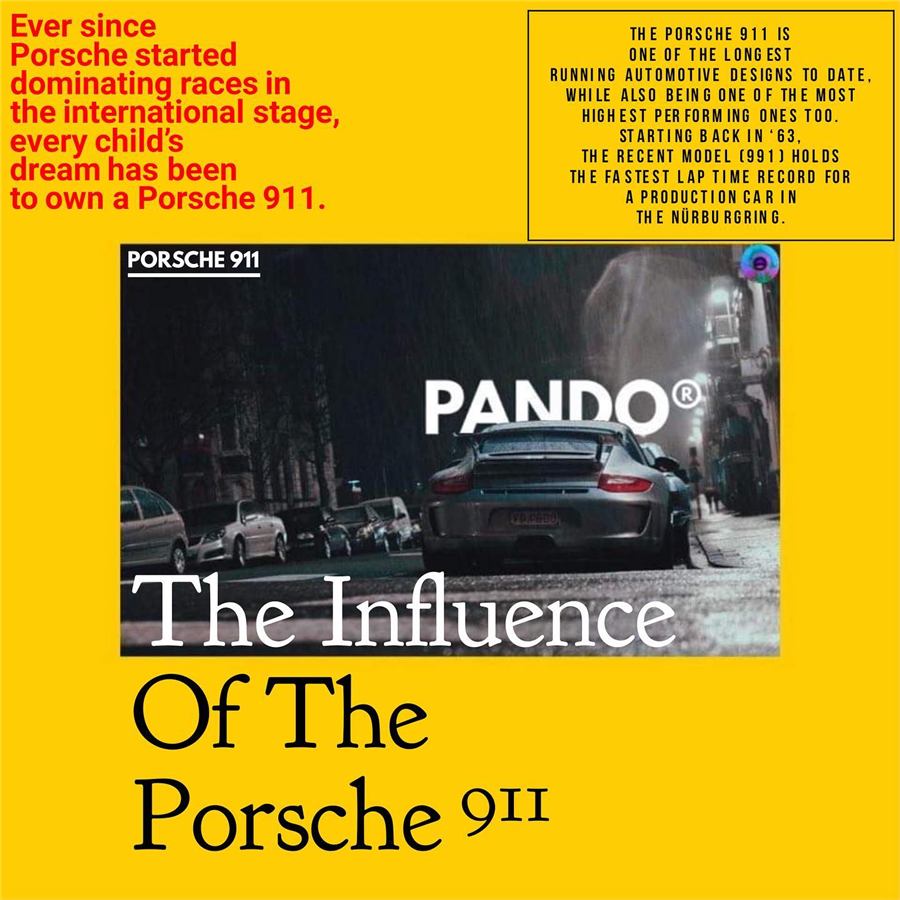
What more can we say... it’s a Porsche. The sports car that kept its shape for six decades.
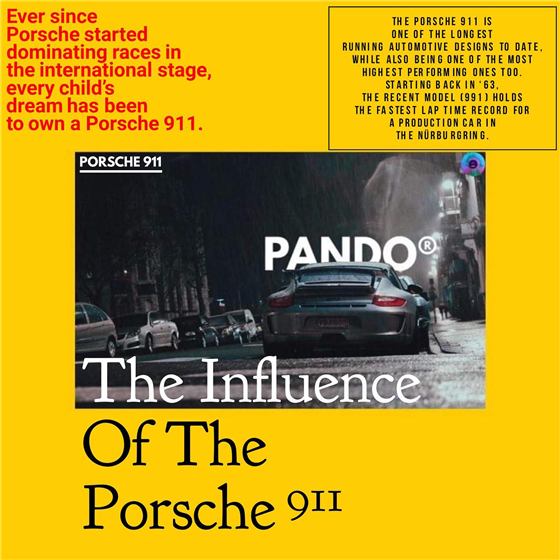
What more can we say... it’s a Porsche. Very few cars can be recognised instantly from their outline alone, and the 911 has kept that same shape for more than half a century.
The car that was almost called 901
Porsche introduced the car in September 1963 at the Frankfurt motor show, as a successor to the 356. Its shape was the work of Ferdinand Alexander Porsche, known as Butzi, the founder’s grandson, whose sketches go back to 1959. It was called the 901.
That lasted about a year. When the production car appeared at the Paris show in 1964, Peugeot pointed out that it claimed three-digit car names with a zero in the middle. So Porsche swapped the zero for a one, and one of the most famous names in motoring was born from a trademark dispute. Only 82 cars had been built under the old name.
The wrong idea, done right
Its engine sits behind the rear axle, a layout most engineers would have told you to avoid. All that weight hanging off the back made early cars tricky at the limit, and they earned a reputation for it. Porsche’s answer was never to move the engine. It simply kept improving the car, one generation at a time. That stubbornness is the whole personality of the 911.
Winning everywhere
In January 1968, Vic Elford and his co-driver David Stone took a 911 T to overall victory at the Monte Carlo Rally. A week later, Elford won at Daytona in a different Porsche, which tells you the kind of month he was having. The 911 has since won at Le Mans, at Daytona and on rally stages around the world.
The 1973 Carrera RS, a lightweight special built so Porsche could go racing, was made in just 1,580 examples. Today, it’s one of the most desired cars ever made. And the Rennsport cars are still some of the best track cars you can buy.
Six decades, one idea
The 1975 model year brought the first production turbocharged 911, the 930, and its fearsome reputation. The 964 arrived for 1989, and the 993 in the mid-1990s was the last of the air-cooled cars, which is why some fans still treat it as sacred.
Then, in 1998, the 996 switched to water cooling. To purists, it was close to heresy, and yet many now see it as the change that let the 911 keep going. The 997, 991 and today’s 992 have carried the same silhouette ever since. In May 2017, the millionth 911 rolled out of the factory. In a 1999 poll to find the Car of the Century, it finished fifth.
The influence
Why does every sports car maker measure itself against this one? Because it’s usable, reliable and thrilling all at once. You can drive it to work on Monday and to a track on Saturday, and few cars have managed that for so long. Its design has also influenced countless other cars.
So we’ll say it again: what more can we say? Which generation would you take?
Sources
- Porsche 911, Wikipedia
- Porsche 901, Wikipedia
- 911 Rallye Monte Carlo 1968, Porsche Newsroom
- Vic Elford, Wikipedia